Introduction
Engineers sourcing die cast prototypes face a fundamental dilemma: they need production-representative metal parts quickly, yet traditional foundries impose 4–8 week lead times, enforce high minimum order quantities, or simply ignore small-volume orders. Meanwhile, 3D printing, while fast, cannot replicate the grain structure, heat dissipation properties, EMI shielding, and structural integrity required for meaningful functional testing.
That gap carries real program risk. Rapid die casting bridges it by delivering genuine alloy properties (aluminum, zinc, magnesium), production-representative flow characteristics, and proper thermal performance — in 10–15 days rather than 8 weeks.
Choosing the wrong partner at this stage doesn't just delay T1 samples. Poor DFM feedback, tool redesigns, or outsourced secondary operations can introduce tolerance drift and set entire programs back by weeks.
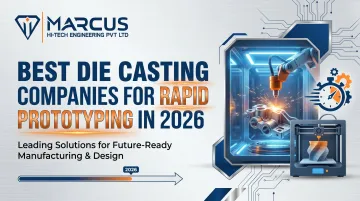
This guide evaluates the best die casting companies for rapid prototyping in 2026 across five criteria:
- Speed to T1 samples — how fast you receive first-off tooling parts
- Engineering support depth — DFM analysis, simulation, and design feedback quality
- Machine tonnage range — flexibility across part sizes and complexity
- Certifications — IATF 16949, ISO 9001, APQP/PPAP compliance
- In-house post-processing — machining, surface treatment, and assembly under one roof
TL;DR
- Rapid die casting uses soft tooling (P20 or aluminum molds) to deliver production-intent metal prototypes 40–60% faster than hardened steel production tools
- Top partners combine 10–15 day T1 sample lead times with DFM feedback, ISO 9001/IATF 16949 certifications, and prototype-to-production scaling without retooling delays
- Machine tonnage range determines component scope: partners with 40T–2500T capacity handle intricate small parts and large structural castings without vendor switching
- Factory-direct partners deliver tighter engineering collaboration and lower total program cost than marketplace platforms — at the cost of a longer vetting process
- Marcus Hi-Tech Engineering is an IATF 16949-certified factory-direct partner with 80T–2500T die casting capacity, in-house CNC machining, and logistics serving 8 global regions
What Is Die Casting for Rapid Prototyping?
Die casting for rapid prototyping uses cost-effective soft tooling (typically aluminum or P20 steel molds) to produce functional metal parts in real production alloys — aluminum A380/ADC12, zinc Zamak 3, magnesium AZ91D — without the lead time or capital cost of full production tooling.
Two common alternatives fall short in specific ways: 3D printing cannot match die casting's part density (99.8% vs. 98–99.5%) or surface finish, and CNC machining becomes cost-prohibitive above roughly 500 units.
The high-pressure die casting market demonstrates the urgency behind this capability. According to Mordor Intelligence, the HPDC market reached USD $40.05B in 2025 and is forecast to hit USD $57.43B by 2031 at a 6.19% CAGR. Automotive applications hold 61.23% share, while EV battery housings and motor components are surging at 10.35% CAGR — outpacing the overall market by 4 percentage points.
Two Tooling Tiers:
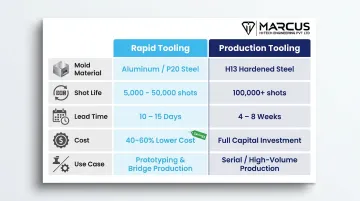
Rapid and production tooling serve different stages of the product lifecycle — knowing which tier you need determines your cost, timeline, and partner requirements:
| Attribute | Rapid Tooling | Production Tooling |
|---|---|---|
| Mold material | Aluminum or P20 steel | H13 hardened steel |
| Shot life | 5,000-50,000 shots | 100,000+ shots |
| Lead time | 10-15 days | 4-8 weeks |
| Cost | 40-60% lower | Full investment |
| Use case | Prototype, bridge production | Serial production |
The strongest rapid prototyping partners cover both tiers in-house. That means you can validate a prototype in soft tooling, then scale directly into hardened production tools — no vendor switch, no re-qualification delays, no lost process knowledge.
Top 5 Die Casting Companies for Rapid Prototyping in 2026
These companies were evaluated on T1 sample lead time, machine tonnage range, in-house vs. outsourced tooling, certifications, DFM/engineering support, post-processing capability, and global supply chain readiness.
Marcus Hi-Tech Engineering
Background:
Based in Coimbatore, India, Marcus Hi-Tech Engineering brings 45+ years of proven manufacturing experience to global customers across automotive, EV, aerospace, electronics, healthcare, energy, and industrial sectors. From die casting and CNC machining to sheet metal, plastics, and electro-mechanical assemblies, Marcus delivers integrated manufacturing from a single certified partner.
Differentiators:
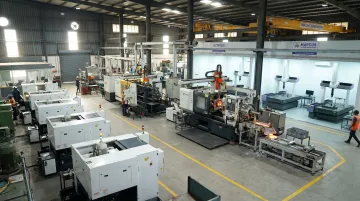
Marcus operates die casting machines from 40T to 2500T — one of the widest tonnage ranges in the industry — covering precision small-part prototypes through large structural components. The company holds IATF 16949:2016 and ISO 9001 certifications and runs DFM, APQP, PPAP, and FAIR as standard process controls.
A dedicated Tool Room with in-house tool design and mold flow simulation validates designs before metal is cut, eliminating costly rework. In-house CNC machining (3/4/5-axis, VMC, Turn Mill, VTL) keeps post-cast operations under one roof, removing inter-vendor tolerance drift.
| Capability | Specification |
|---|---|
| Machine Range & Process | Die casting 40T-2500T; Hot and cold chamber; In-house CNC (3/4/5-axis); Sheet metal, plastics, assembly |
| Certifications & Quality | IATF 16949:2016 & ISO 9001; DFM, APQP, PPAP, FAIR; CMM and advanced metrology; Inline inspection |
| Global Reach & Best For | Serves Australia, UK, North America, Vietnam, India, Middle East, Italy, Mexico; Best for end-to-end prototyping-to-production in automotive, EV, aerospace, electronics |
RapidDirect
Background:
A Shenzhen-based factory-direct manufacturer offering die casting through an AI-powered instant quoting platform. RapidDirect specializes in rapid tooling with T1 aluminum die cast samples in 10-15 business days. The company also offers vacuum casting for early form-and-fit validation before committing to metal tooling.
Differentiators:
RapidDirect owns its manufacturing facilities, running 60+ die casting machines that eliminate broker markup and enable direct engineer-to-toolmaker communication. RapidDirect provides instant DFM feedback before order placement.
Tolerances range from ISO 2768-m (standard) to ±0.01mm (precision with secondary machining). The company holds ISO 9001:2015 and IATF 16949 certifications.
| Attribute | Specification |
|---|---|
| Lead Time & Tooling | T1 Samples: 10-15 days (rapid tooling); Production tooling: 100k+ shots; Mold life: 5k-50k (rapid) |
| Materials & Tolerance | Aluminum (A380, ADC12), Zinc, Magnesium; Tolerance: ISO 2768-m to ±0.01mm |
| Best For | Engineers needing fast factory-direct prototypes with instant DFM; early-stage EV, electronics, consumer product development |
Dynacast International
Background:
A global precision die casting company with facilities across multiple continents, Dynacast is known for proprietary multi-slide technology that enables extremely complex, tight-tolerance geometries — particularly in zinc and magnesium for miniaturized components. Part of Form Technologies.
Differentiators:
Multi-slide technology produces intricate internal geometries without secondary machining, achieving tolerances within ±0.02mm. Clamping force ranges from 28-500 tons. ISO 9001 and IATF 16949 certified. Best suited for high-precision small-to-medium components in electronics, medical devices, and automotive connectors. Note: higher initial tooling investment; less optimal for large structural parts.
| Attribute | Specification |
|---|---|
| Technology & Capacity | Multi-slide proprietary die casting; Clamping force: 28-500 tons; Tolerance: ±0.02mm |
| Lead Time & Certifications | Prototyping via modular tooling: 10-15 working days; ISO 9001, IATF 16949 |
| Best For | High-precision micro and miniature components; aerospace connectors, medical device housings, complex zinc/magnesium geometries |
Xometry
Background:
A US-headquartered digital manufacturing marketplace connecting buyers with a global network of 5,000+ vetted suppliers. Xometry does not own manufacturing facilities; instead, it matches orders to available capacity. Supports both hot-chamber and cold-chamber die casting with tooling lead times of 12-20 days.
Differentiators:
Instant AI-powered quoting engine delivers pricing and lead time estimates immediately upon CAD upload. Useful for sourcing multi-process BOMs (CNC + sheet metal + die casting) through a single platform. Tolerances of ±0.076mm-±0.127mm depending on alloy. Ideal for procurement teams managing complex programs across multiple part types.
| Attribute | Specification |
|---|---|
| Sourcing Model & Lead Time | Marketplace (5,000+ global suppliers); Tooling lead time: 12-20 days; No single factory location |
| Tolerance & Materials | ±0.076mm-±0.127mm (Al/Zn); Aluminum, Zinc; Supplier capability varies |
| Best For | Multi-process BOM sourcing; capacity-constrained projects; procurement teams needing fast price comparisons |
Sunrise Metal
Background:
A China-based aluminum die casting specialist focused on high-mix, low-volume (HMLV) production and rapid prototyping. Features proprietary vacuum die casting technology that draws air out of the mold cavity prior to injection, reducing internal porosity and producing denser, weldable, heat-treatable parts.
Differentiators:
Vacuum die casting achieves part density exceeding 99%, enabling post-cast welding and heat treatment — critical for automotive structural and medical device components. Clamping force range 180-800 tons. Tolerance capability ±0.127mm. Holds IATF 16949 and ISO 13485 certifications, making it suitable for medical device prototyping. Lead time is 2-3 weeks.
| Attribute | Specification |
|---|---|
| Technology & Capacity | Vacuum die casting; Clamping force: 180-800 tons; Primary alloys: A380/ADC12 |
| Lead Time & Certifications | T1 samples: 2-3 weeks; IATF 16949, ISO 13485; Tolerance: ±0.127mm |
| Best For | High-density aluminum prototypes requiring welding or heat treatment; medical devices; automotive structural components |
How We Chose the Best Die Casting Companies for Rapid Prototyping
Companies were assessed against criteria that reflect what actually matters in a rapid prototyping engagement — not brand size or marketing claims. The most common buyer mistake: prioritizing the lowest tooling quote without evaluating DFM capability, post-casting operations, or certification scope. This leads to expensive rework, mold redesigns, and missed launch timelines.
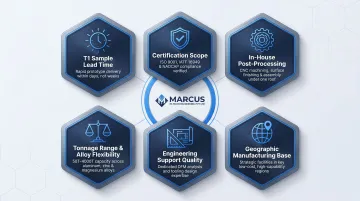
Core Selection Factors:
- T1 Sample Lead Time: Rapid tooling (soft/aluminum molds) delivers T1 samples in 10-15 business days versus 4-8 weeks for production tooling. Partners offering both tooling tiers let you scale to production without switching vendors.
- Certification Scope: ISO 9001 is the baseline. IATF 16949 is required for automotive/EV programs; ISO 13485 for medical devices; AS9100 for aerospace. Verify certifications are scope-relevant — not just held by the parent company.
- In-House Post-Processing: Post-machining, assembly, and surface finishing should happen under one roof. When outsourced, tolerance drift between vendors becomes a compounding risk.
- Tonnage Range and Alloy Flexibility: A partner with 40T–2500T capacity handles both small intricate parts and large structural components. Limited tonnage range often forces mid-program vendor changes.
- Engineering Support Quality: DFM feedback, mold flow simulation, and APQP/PPAP readiness are non-negotiable for programs intended to scale. Partners who review DFM before tooling starts prevent the most expensive redesigns.
- Geographic Manufacturing Base: For global buyers, facility location affects cost, lead time, and supply chain resilience. Partners with India-based manufacturing offer cost advantages relative to equivalent China-sourced capacity while maintaining certified quality — and can serve North America, the UK, Australia, the Middle East, and Europe without single-country supply chain exposure.
Conclusion
The right rapid die casting partner does more than deliver T1 samples quickly. They support DFM early, maintain dimensional integrity across post-cast operations, and scale smoothly from 50 prototypes to high-volume production — without requiring a supplier change.
Evaluate partners on total program cost (tooling + piece price + machining + logistics), not just quoted tooling cost. Verify certifications are scope-relevant: IATF 16949 for automotive/EV, ISO 13485 for medical. Confirm whether post-cast CNC, CMM inspection, and assembly are handled in-house or outsourced.
Marcus Hi-Tech Engineering has been supporting global OEMs and Tier-1 suppliers since 1980. Key capabilities include:
- IATF 16949:2016 and ISO 9001 certified across automotive, EV, and industrial programs
- Die casting machines from 40T to 2500T covering prototype through high-volume production
- In-house CNC machining, Tool Room with simulation, and CMM-based inspection
- Direct service to customers across 8 global markets including North America, UK, and Australia
If your program needs a single partner from first prototype to full production, contact Marcus to walk through your requirements.
Frequently Asked Questions
How much does it cost to die-cast aluminum?
Aluminum die casting has two cost drivers: tooling (NRE) and piece price. Rapid tooling typically runs $3,000–$15,000 depending on part complexity, compared to $20,000–$80,000+ for hardened production dies. Piece price drops sharply at volume — making rapid tooling the practical choice for prototype runs of 50–500 parts.
What materials can be used for rapid prototyping?
The most commonly used die casting alloys for prototyping are A380 and ADC12 aluminum (strength-to-weight ratio), Zamak 3 zinc (thin walls and precision geometries), and AZ91D magnesium (lightweight structural parts). Material selection depends primarily on weight targets, wall thickness, and mechanical load requirements.
What is HPDC aluminum?
HPDC (High-Pressure Die Casting) is the process of injecting molten aluminum into a steel mold under high pressure — typically 1,500-25,000 psi — producing near-net-shape parts with tight tolerances and excellent surface finish. Automotive, EV, and electronics manufacturers rely on HPDC for structural and functional components where dimensional consistency and surface quality are non-negotiable.
What is the typical lead time for rapid die casting prototypes?
Lead time depends on tooling type. Rapid tooling (soft/aluminum molds) typically delivers T1 samples in 10-15 business days, while production tooling (hardened steel) takes 4-8 weeks. The true start of the clock is DFM approval date, not deposit date.
What is the difference between rapid tooling and production tooling in die casting?
Rapid tooling uses softer mold materials (P20 steel or aluminum), lasts 5,000-50,000 shots, and costs 40-60% less than production tooling — making it ideal for prototyping and bridge production. Production tooling uses hardened H13 steel, lasts 100,000+ shots, and is designed for mass production volumes.
What certifications should I look for in a die casting partner for automotive or EV programs?
IATF 16949:2016 is the minimum requirement for automotive and EV supply chains, as it mandates APQP, PPAP, and FMEA processes. ISO 9001 is the baseline quality standard acceptable for non-automotive programs. For medical device components, ISO 13485 is the relevant standard.