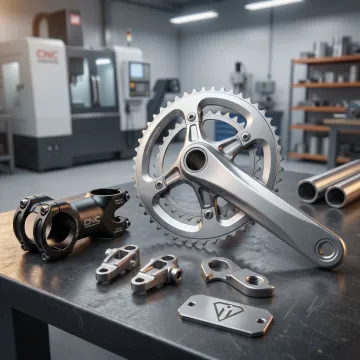
Forged aluminum is aluminum that has been shaped under compressive force rather than simply poured into a mold. This process improves grain flow and structural integrity, making it well suited for parts that need higher strength, better fatigue resistance, and dependable performance. For bicycle and e-bike components, forging is often chosen for parts that must balance low weight with durability.
What bicycle and e-bike parts can be made from forged aluminum?
Forged aluminum can be used for a wide range of structural and precision components, including crank-related parts, pedal bodies, brackets, mounts, linkage elements, housings, and custom OEM hardware. The exact suitability depends on geometry, load requirements, and finishing needs. Marcus supports manufacturability review, tooling, machining, and finishing to help determine the right production route for each part.
Why choose forging instead of casting for bike components?
Forging is often selected when a part needs improved mechanical strength, better grain structure, and higher resistance to repeated loading. Compared with many cast parts, forged components can offer stronger structural performance for demanding applications. For bicycle and e-bike products, this can be especially valuable in parts exposed to vibration, rider load, and long-term fatigue cycles.
Does Marcus provide CNC machining after forging?
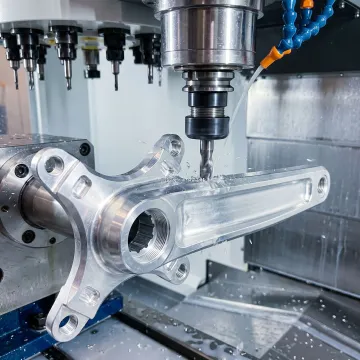
Yes. Marcus supports forged part programs with in-house CNC machining using 3, 4, and 5-axis equipment. This allows critical features such as bearing bores, threaded interfaces, mounting faces, and precision datums to be machined to tight tolerances. Combining forging with machining under one manufacturing partner helps improve consistency, reduce coordination issues, and streamline production planning.
What surface finishes are available for forged aluminum parts?
Marcus offers multiple in-house finishing options for aluminum parts, including anodising, powder coating, blasting, polishing, chromation, and heat treatment support. These processes can improve corrosion resistance, wear performance, appearance, and batch consistency. Finished parts are supported by testing such as salt spray, coating thickness checks, and adhesion verification, with batch certificates provided on shipments.
Can Marcus help with prototype and new product development?
Yes. Marcus supports new product development through DFM collaboration, simulation-led review, rapid prototyping, tooling trials, and validation before scale-up. This process helps identify manufacturability risks early, refine part geometry, and prepare for repeatable production. For bicycle and e-bike brands, that can shorten development cycles and reduce costly changes later in the program.
What quality standards does Marcus follow?
Marcus operates under IATF 16949:2016 and ISO 9001 certified quality systems, with structured controls such as APQP, PPAP, FAIR, inline inspection, and advanced metrology support. These standards help maintain process discipline from tooling and forging through machining, finishing, and assembly. For OEM customers, this provides stronger traceability, validation, and confidence in production consistency.
Does Marcus supply customers outside India?
Yes. Marcus serves customers across India, North America, the United Kingdom, Australia, the Middle East Asia region, Italy, Mexico, and Vietnam. Its global manufacturing footprint and audited partner network help support international sourcing requirements while keeping quality systems aligned. This makes Marcus a practical option for brands seeking a single partner for multi-stage component manufacturing.